
Event Types
All CoVEsAbout event
Collaboration for Competencies: The Winning Formula for Europe’s AgriFood Sector
The Pact for Skills
Launched in November 2020 as a flagship action of the European Skills Agenda, the Pact for Skills is a foundational pillar of the broader political and economic vision known as the Union of Skills.
The primary objective of this strategic framework is to ensure the economic competitiveness and labor market resilience of Europe by achieving ambitious quantitative and qualitative targets set for 2030 (including the goal that at least 60% of adults participate in training every year).
The strategic and operational goals of the Pact can be summarized as follows:
- Supporting the green and digital transitions: Helping workers and organizations acquire the skills needed to successfully navigate technological changes and ecological transitions, thereby closing the skills gap.
- Stimulating stakeholder cooperation: Building a collaborative network connecting businesses, local, regional, and national authorities, social partners, and education providers.
- Promoting lifelong learning: Fostering a continuous learning culture for all working-age individuals, upgrading both basic and advanced skills.
- Creating targeted partnerships (large-scale or regional): Developing strategic alliances within specific industrial ecosystems to identify actual skill needs and plan shared training pathways.
- Optimizing access to funding: Providing members with guidance and support to make the most of dedicated European and national funds.
Learn more: Pact for Skills Official Website
The Pact is open to any private or public organization, or partnership of organizations, aiming to upskill or reskill working-age individuals. Organizations must be based in one of the EU Member States, EFTA countries, or candidate countries.
The AGRIFOOD4FUTURE consortium participates in the Pact for Skills because it shares the Pact’s core principles and actively supports its implementation through project initiatives.

Large-Scale Skills Partnerships under the Pact for Skills
The Large-Scale Skills Partnerships (LSPs) established under the Pact for Skills are operational cooperation models focused on 14 major industrial ecosystems (including automotive, digital, tourism, construction, health, and aerospace). The main goal of an LSP is to unite key stakeholders from an economic sector to make concrete, joint commitments toward workforce upskilling and reskilling.
Learn more: Industrial Ecosystems and Partnerships
AgriFood Large-Scale Skill Partnership
The agri-food sector also has its own dedicated LSP. The agri-food ecosystem includes plant and animal production as well as food processing, and currently brings together over 100 members.
Alongside industrial and research players, the LSP includes Regional Skill Partnerships within the sector, Blueprint Alliances, Alliances for Education and Enterprise, and CoVEs.
The network’s commitments are numerous and can be summarized as follows:
- Establishing an agri-food skills partnership to connect educational institutions, businesses, and innovation actors, while boosting international cooperation and social dialogue.
- Fostering a continuous learning culture with customized training modules focused on digitalization, sustainability, and the circular bio-economy.
- Collecting data on occupational profiles and sub-sector needs to set quantitative KPIs, track the partnership’s progress, and assess training outcomes.
- Supporting international mobility for learners and workers, promoting gender equality, and mobilizing financial or non-financial contributions aligned with regional and EU support schemes.
Learn more: Agri-Food LSP Overview
The AGRIFOOD4FUTURE project is a Key Project within the network and actively participates in the LSP Steering Committee. This involvement is highly strategic, reinforcing the partnership’s current and future role in shaping workforce training and education for the agri-food sector.
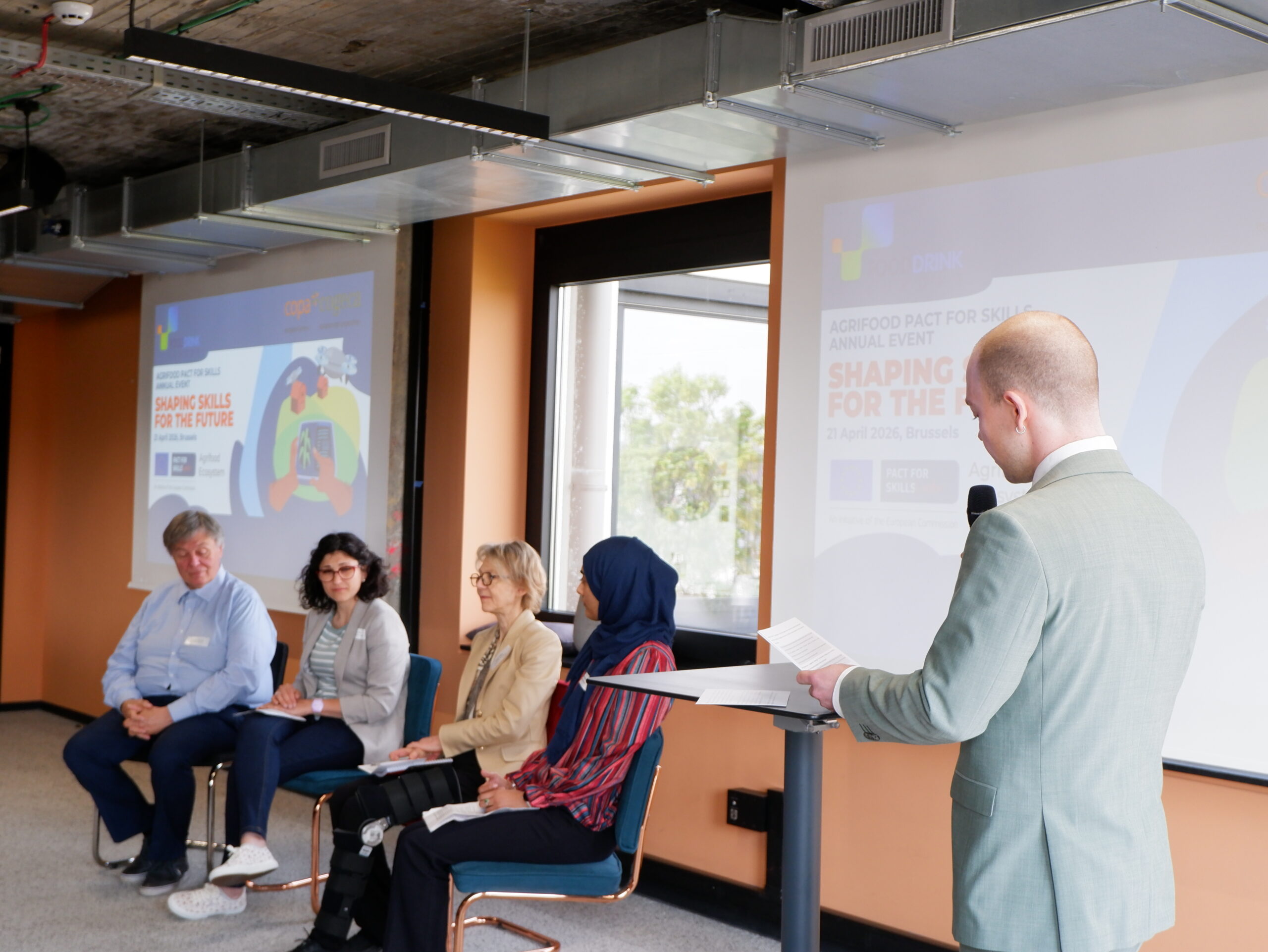
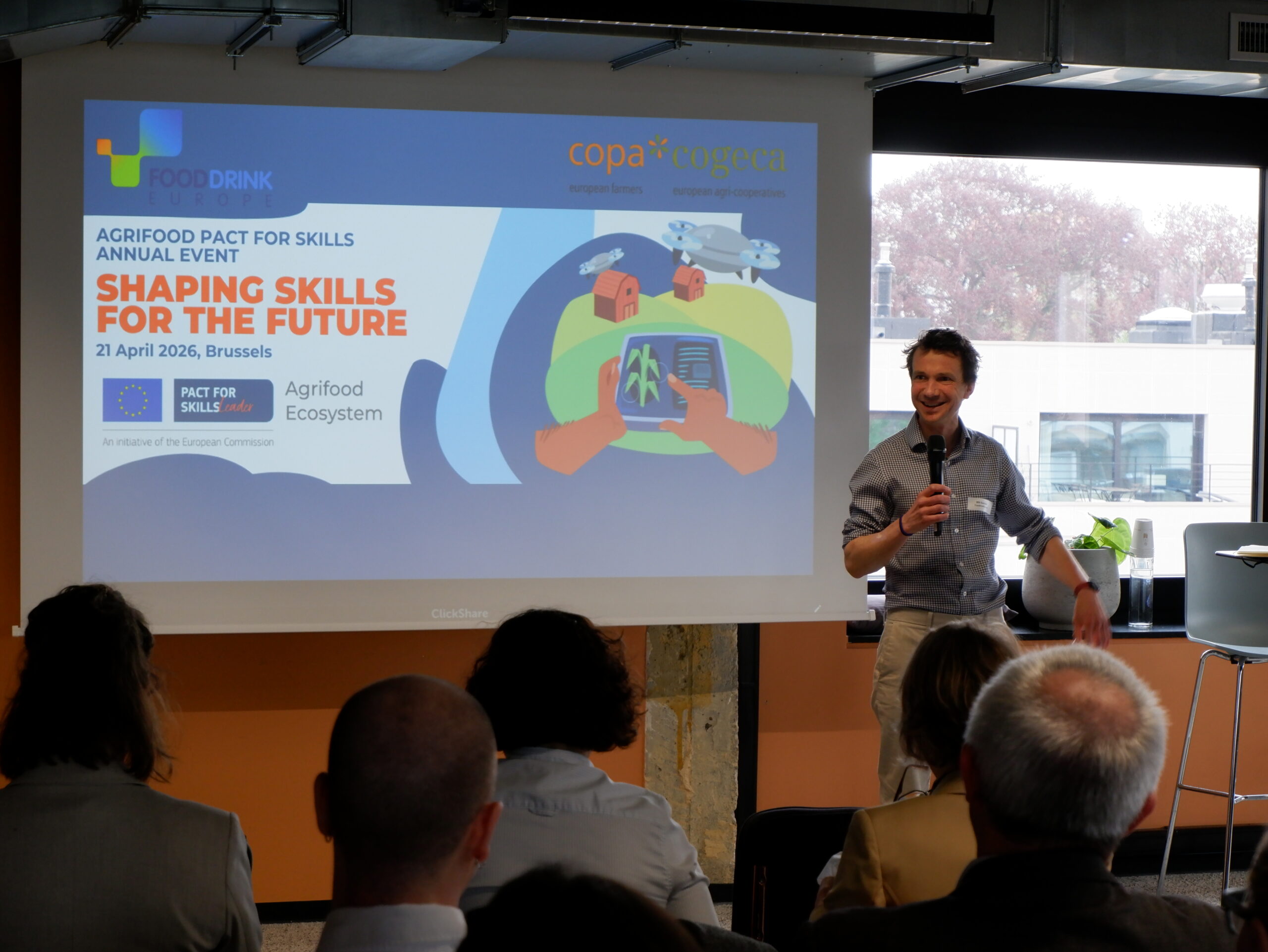
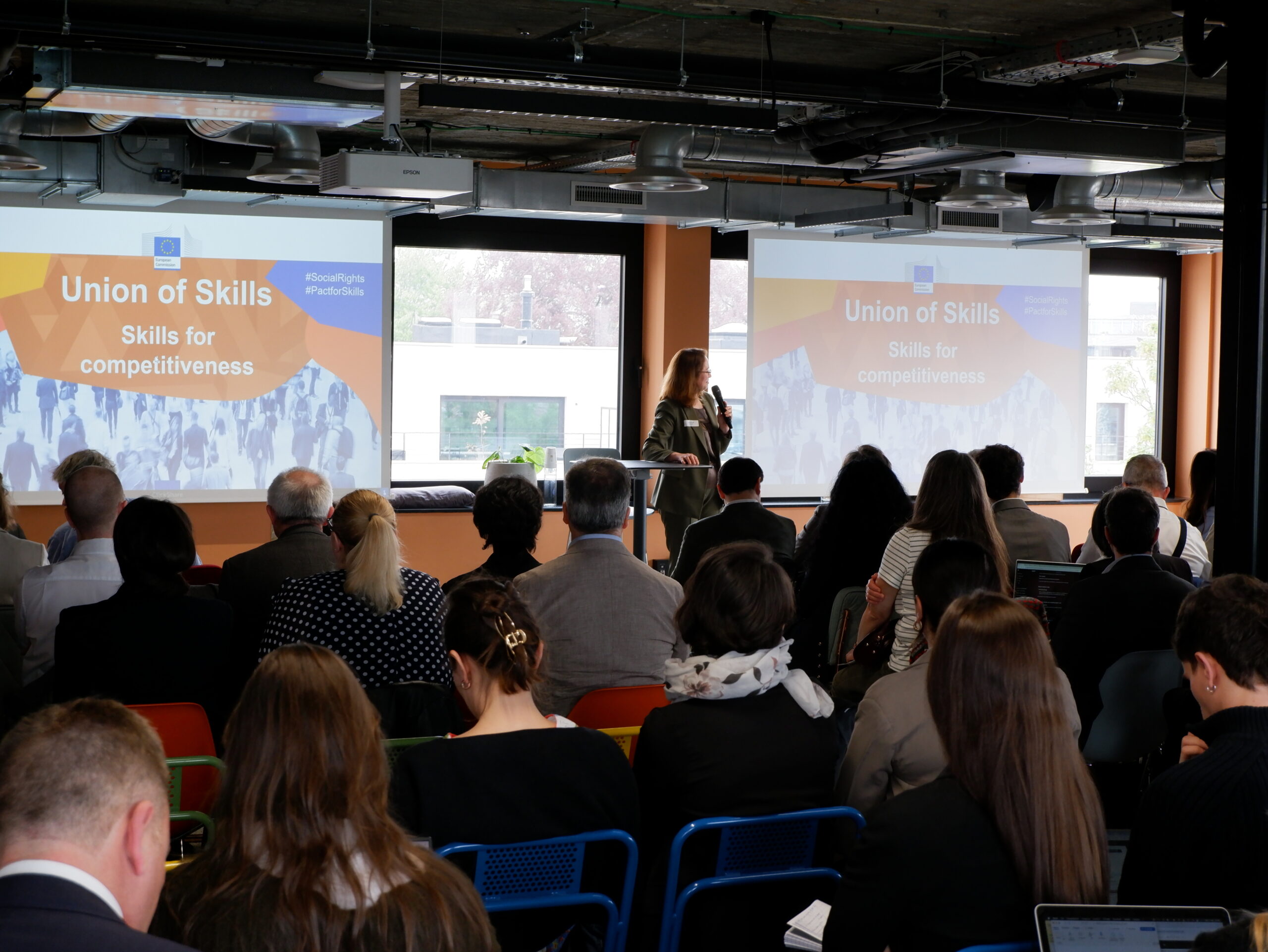
To keep momentum strong and drive collaboration forward, the LSP organizes an annual event every year, serving as a key platform to foster discussion on the network’s core objectives, ongoing progress, and collective achievements.
The Role of the CoVEs
While the Pact for Skills sets the political direction and Large-Scale Partnerships translate needs at the individual industrial ecosystem level, CoVEs (Centers of Vocational Excellence) provide the essential territorial and operational infrastructure to bring these objectives to life on the ground.
Without CoVEs, European strategies risk remaining mere statements of principle. CoVEs fulfill crucial functions:
- Territorial anchoring: CoVEs act as regional hubs where Vocational Education and Training (VET) institutions, universities, businesses, and social partners engage in continuous dialogue. They gather signs of change from the local market and feed them into broader European partnership circuits, while conversely translating EU guidelines into local training plans.
- Design of innovative and flexible curricula: CoVEs go beyond traditional training delivery, developing agile, modular study programs tailored to micro-credentials.
- Promotion of lifelong learning and inclusion: CoVEs serve as open reference points not only for young students, but also for adult workers and entrepreneurs needing reskilling to stay ahead in a rapidly shifting digital and climate-driven labor market.
- Catalysts for investment and innovation: By building robust local ecosystems, CoVEs attract regional, national, and European funding, stimulating applied research and technology transfer directly for companies across the agri-food supply chain.
The AGRIFOOD4FUTURE project is involved in all these initiatives as a strategic driver for advancing skills and innovation within the agri-food sector.